Relationship Coaching: Benefits, How It Works, and Who It Helps
Contents
Every relationship faces challenges—whether it’s communication breakdowns, misaligned goals, or simply feeling disconnected. While counseling often focuses on healing past wounds, relationship coaching empowers couples (and individuals) to focus on the present and future. It’s about building the tools, habits, and mindset that help relationships thrive—not just survive.
But what exactly is relationship coaching, and how does it differ from couples counseling? In this blog, we’ll cover:
By the end, you’ll know whether relationship coaching might be the right step for you or your relationship.
What Is Relationship Coaching?
Relationship coaching is a forward-focused, goal-oriented process designed to help couples and individuals create the kind of relationships they want. Unlike therapy, which may focus on diagnosing and treating emotional or psychological issues, coaching emphasizes:
- Identifying patterns that may hold you back.
- Improving communication and emotional connection.
- Setting shared goals as a couple.
- Building new skills for conflict resolution, intimacy, and partnership.
A relationship coach is not a therapist—they’re a trained professional who helps you move from where you are now to where you want to be in your relationship.
Relationship Coaching vs. Couples Counseling
While both support relationships, the approaches and goals differ:

In short: If you want to heal past pain, counseling may be the right path. If you want to grow your relationship forward, coaching might be exactly what you need. For a deeper dive into these differences, check out our recent blog on Coaching vs Counseling: How to Choose What You Need.
How Does Relationship Coaching Work?
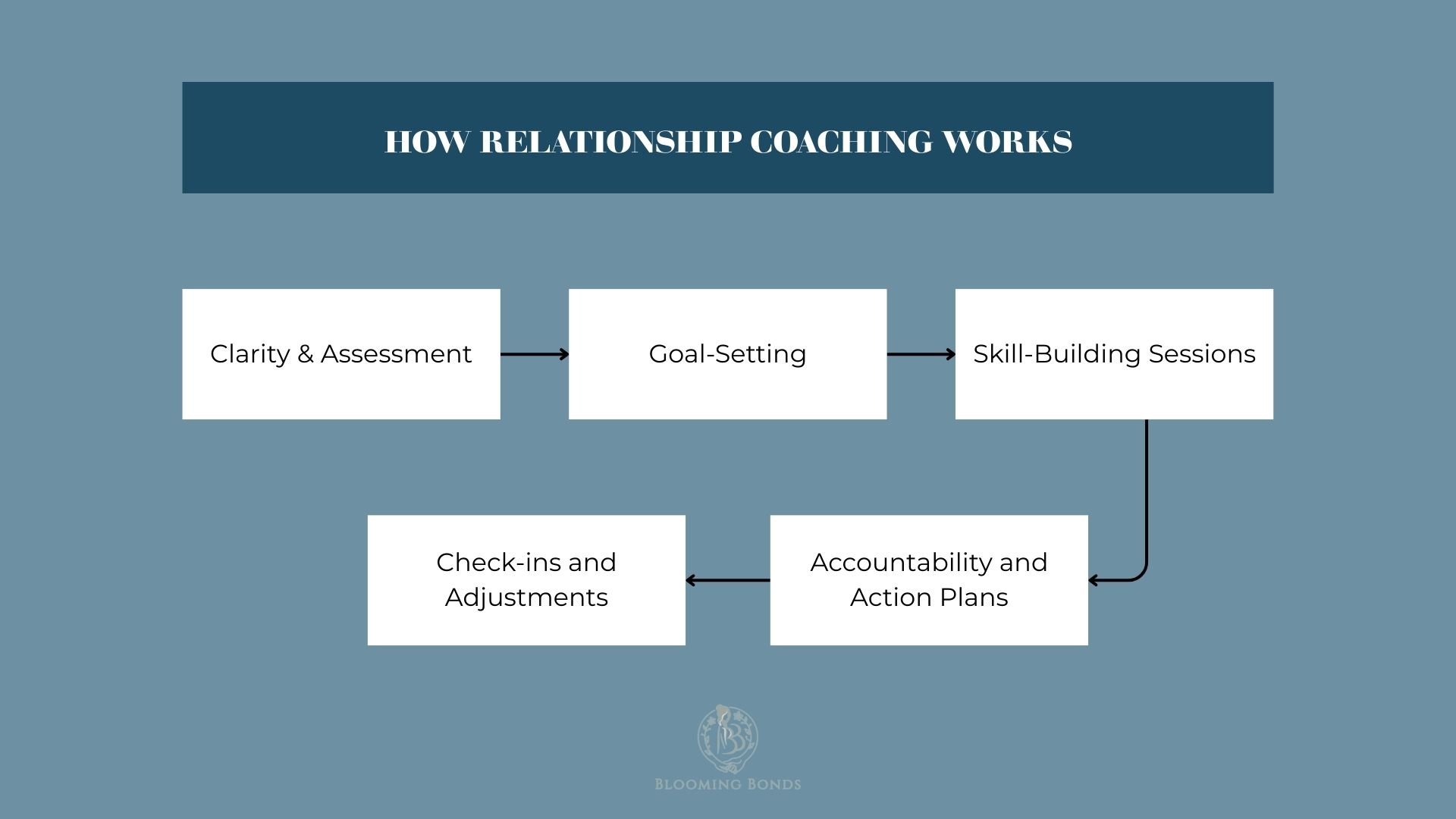
Every relationship coach has their own style and approach, but most coaching follows a structured journey that helps you move from clarity to growth. Here’s what the process typically looks like:
1. Clarity and Assessment
The first step is about taking an honest look at where you are right now. You and your partner (or you alone, if you’re doing individual relationship coaching) will reflect on what’s working well and what feels challenging. A coach may use guided questions, self-assessments, or reflective exercises to uncover patterns in communication, emotional connection, or recurring conflicts. This stage helps set a clear starting point and creates awareness of what needs attention.
2. Goal-Setting
Once you’ve gained clarity, the focus shifts to envisioning the kind of relationship you want. Together with your coach, you’ll set specific and meaningful goals—such as improving emotional intimacy, rebuilding trust after a difficult season, or preparing for big life transitions like engagement, parenthood, or retirement. These goals become your roadmap, ensuring each session has purpose and direction.
3. Skill-Building Sessions
Coaching isn’t just about talking—it’s about learning practical tools you can apply in real life. A coach may guide you through exercises that strengthen communication, reduce misunderstandings, or increase empathy. For example, you might practice active listening, explore new ways to express appreciation, or role-play handling conflicts more constructively. These sessions build skills that support long-term relationship health.
4. Accountability and Action Plans
After each session, you’ll walk away with actionable steps—sometimes referred to as “homework”—to put your learning into practice. This could mean trying a new communication exercise at home, scheduling intentional quality time, or reflecting individually on personal growth habits. Accountability is a core part of coaching; your coach will check in on your progress and encourage you to keep moving forward.
5. Check-ins and Adjustments
Relationships aren’t static, and neither is coaching. As your connection grows and circumstances shift, your goals may evolve. Regular check-ins allow you and your coach to celebrate progress, identify new challenges, and adjust your plan as needed. This flexibility ensures that coaching stays relevant and aligned with your relationship’s changing needs.
In many ways, relationship coaching is like having a personal trainer for your relationship—someone who provides structure, encouragement, and strategies so that you and your partner can grow stronger, healthier, and more connected over time.
Benefits of Relationship Coaching
Relationship coaching offers far more than quick fixes—it provides couples and individuals with the tools, insights, and habits to create lasting change. Here are some of the most valuable benefits you can expect:
✅ Improved Communication
So many relationship struggles stem from not feeling heard or understood. Coaching helps you and your partner develop active listening skills, learn how to express needs clearly, and reduce the small misunderstandings that often snowball into big arguments. Many couples report that even after just a few sessions, they feel more “in sync” during everyday conversations.
✅ Stronger Emotional Connection
Beyond communication, coaching digs deeper into the emotional needs and values that drive your relationship. By uncovering what truly matters to each partner, coaching helps you connect on a more authentic level. This often leads to greater intimacy, trust, and a sense of being “on the same team” again.
✅ Better Conflict Resolution
Disagreements are natural in any partnership—but the way you handle them can either strengthen or weaken your bond. Through guided exercises, you’ll learn how to step out of defensive cycles, approach conflict with empathy, and resolve disagreements without tearing each other down. Couples often leave coaching with renewed confidence in their ability to navigate tough conversations.
✅ Shared Goals and Vision
It’s easy for couples to get caught up in the busyness of daily life and lose sight of where they’re headed together. Relationship coaching helps you step back, align your values, and set a clear vision for the future—whether that’s preparing for marriage, starting a family, or mapping out long-term dreams. Having shared goals creates stability and a renewed sense of partnership.
✅ Personal Growth
Even when the focus is on the relationship, individuals often experience significant personal growth. Coaching encourages self-reflection, helps you build confidence, and provides clarity about what you need and want—not only from your partner but also for your own well-being.
At Blooming Bonds, our Relationship Coaching services are designed to help you experience these benefits firsthand. Whether you’re looking to deepen connection, improve communication, or strengthen your long-term vision as a couple, coaching provides a supportive and structured way to make lasting progress.
Potential Drawbacks of Relationship Coaching
While relationship coaching can be transformative, it’s not the right fit for every couple. Here are a few important considerations before starting:
🚫 Not a Substitute for Therapy
Relationship coaching focuses on growth and the future, but it is not designed to address deep emotional wounds, trauma, or mental health concerns. If you or your partner are navigating these challenges, our Couples Counseling services at Blooming Bonds provide the therapeutic support and healing you may need before coaching can be effective.
💡 Requires Commitment
Coaching works best when both partners are willing to show up with honesty and openness. It isn’t a “quick fix”—it requires consistent effort, self-reflection, and practicing new skills outside of sessions. Without this commitment, progress can be limited.
🔄 Results Vary
Every relationship is unique, which means coaching outcomes will look different for each couple. Success depends largely on your willingness to apply what you learn, stay accountable, and adapt along the way.
In short, relationship coaching is a powerful tool for growth and connection, but if your needs are rooted in healing past pain or addressing deeper issues, Couples Counseling at Blooming Bonds may be the more supportive starting point.
Who Can Benefit from Relationship Coaching?
Relationship coaching can be transformative for:
- Couples preparing for marriage who want to set a strong foundation.
- Long-term partners who feel “stuck” or disconnected.
- Parents navigating the challenges of raising children while maintaining intimacy.
- Individuals who want to break unhealthy patterns before entering a relationship.
- Professionals or busy couples who need structure to balance career and relationship.
Whether you’re dating, engaged, married, or somewhere in between, relationship coaching offers tools to help love grow deeper and stronger.
Final Thoughts
Strong, lasting relationships are built with care, effort, and the right guidance. Relationship coaching offers couples and individuals a supportive space to improve communication, deepen connection, and set a clear vision for the future.
If you’re ready to invest in your relationship and grow together with confidence, our Relationship Coaching services at Blooming Bonds can help you take that next step toward lasting love.